Entry page breakdown
Compare the first tracked pages visitors reached and connect them with available campaign, referral, and device context.
Hitsteps entry and exit page reports identify the first and last tracked pages in a visit, helping you compare landing experiences and investigate where journeys commonly stop.
Boundary reports help narrow an investigation, but traffic source, page purpose, journey length, goals, and tracking coverage determine what the pattern means.
Compare the first tracked pages visitors reached and connect them with available campaign, referral, and device context.
Find pages that often appear last in tracked visits and separate expected endpoints from routes worth investigating.
Inspect the pages and actions before the final tracked page to avoid interpreting an exit without its preceding path.
Use it when you need live visitor context, practical installation routes, and action tools around the traffic you already have.
Hitsteps has kept evolving across website platforms, browser changes, analytics shifts, and store workflows.
WordPress, Shopify, Wix, Google Tag Manager, HTML, CMS, commerce, browser, and desktop setup paths are documented from one hub.
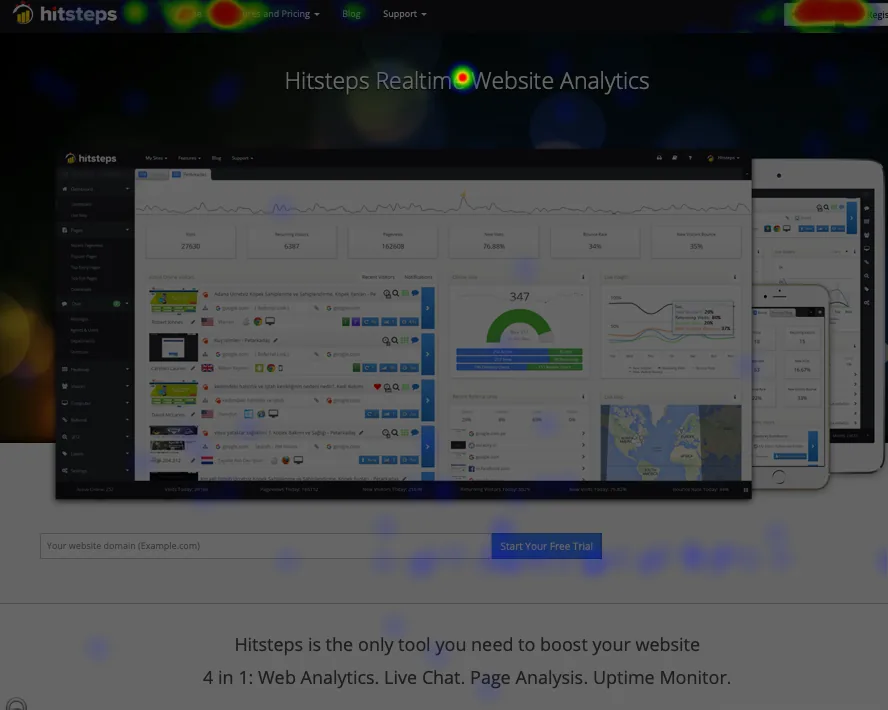
Live dashboard, visitor profiles, heatmaps, chat, Segments, uptime, reports, and alerts stay connected after tracking is installed.


Tracking gaps, blocked requests, consent changes, cross-domain journeys, closed tabs, and untracked destinations can all make a page appear last in the recorded visit.
Filter by a useful period, campaign, source, device, or audience so unrelated visits do not obscure the question.
Identify pages that often begin or end tracked visits and account for their traffic volume and intended role.
Review paths around the page to see whether visitors completed a task, moved elsewhere, or encountered an apparent dead end.
Clarify the next step, repair a broken route, or adjust the landing experience, then compare an equivalent reporting period.
Confirm where campaign visits begin and whether visitors continue toward the intended tracked action.
Investigate pages that frequently end visits before a configured signup, checkout, or other goal.
Recognize exits from thank-you, confirmation, and contact pages that may represent a completed task rather than a problem.
Clear answers about what this feature reports, how to use it, and where its limits are.
An exit page is the final tracked page of any visit. A bounce generally describes a visit with only one recorded page or interaction under the analytics tool's rules, so many exits are not bounces.
No. Confirmation pages, contact details, completed articles, and external handoff pages can be reasonable places to finish. Compare exits with page purpose, traffic volume, goals, and visitor paths.
The next page may be untracked, outside the measured domain, blocked, or loaded after consent or connectivity changed. The report can only use events that reached Hitsteps.
Connect this report with the surrounding visitor, acquisition, and workflow context.
Create a free account, install the Hitsteps tracking code, and confirm your first visit before choosing the plan that fits your traffic and reporting needs.