Live visitor feed
See live website visitors, their current page, entry page, session duration, recent activity, and whether they have visited before.
Real-time visitor tracking shows website activity as it happens, organized around each visit rather than only rolled into charts later.
Hitsteps website visitor tracking software gives your team a live visitor feed with page paths, referrers, campaigns, devices, approximate locations, returning-visitor context, heatmaps, and live chat signals in one dashboard.

Aggregate reports answer how many people visited over a period. Live visitor tracking centers the active or recent visitor so you can see what they did, how they arrived, and where the journey stopped while that context is still useful.
Hitsteps pairs this with broader real-time website analytics, so the same workspace covers journeys, sources, Goals, Segments, Funnels, heatmaps, chat context, and uptime awareness. Features vary by plan.
See live website visitors, their current page, entry page, session duration, recent activity, and whether they have visited before.
Follow the sequence of pages and actions in a visit so you can spot effective routes, confusing loops, and exits that need attention.
Connect referrers, campaigns, landing pages, search traffic, UTM tags, and devices to the behavior that followed after the click. Ad-traffic detection uses confidence-rated URL signals, which are not ads-platform API proof.
Recognize repeat browser visits and preserve useful history. Associate a known profile only when your site legitimately supplies an identifier after a form, login, purchase, or chat interaction. An anonymous visit does not automatically reveal a real person.
Use click attention and page-level behavior to understand which elements attract interest and which important actions get ignored. Heatmaps are available on Growth plans and above.
Explore the website heatmap toolWhen a visitor starts a conversation, keep their source, device, location, current page, and journey close to the chat workflow. Chat seats are available on paid plans; Free includes no chat.
Use it when you need live visitor context, practical installation routes, and action tools around the traffic you already have.
Hitsteps has kept evolving across website platforms, browser changes, analytics shifts, and store workflows.
WordPress, Shopify, Wix, Google Tag Manager, HTML, CMS, commerce, browser, and desktop setup paths are documented from one hub.
Live dashboard, visitor profiles, heatmaps, chat, Segments, uptime, reports, and alerts stay connected after tracking is installed.
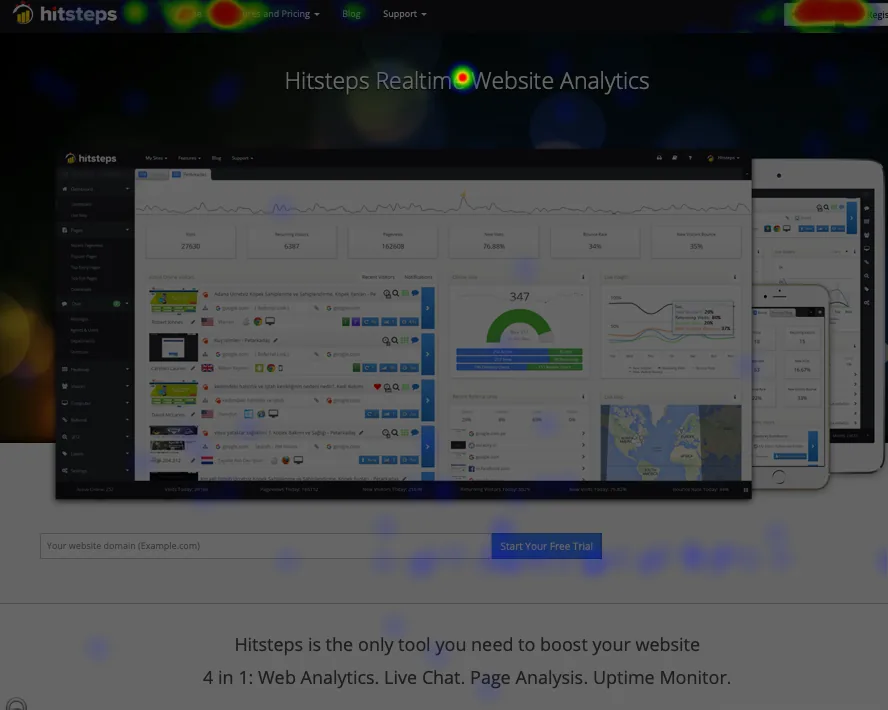

Live detail is most valuable when someone on your team can do something with it: help a prospect, investigate a broken path, confirm a campaign visit, understand a repeat customer, or react when traffic suddenly changes.
The same live feed supports different decisions depending on who is watching it.
Inspect product and checkout journeys in the browser, recognize repeat interest, compare campaign traffic, and see where shoppers leave. Browser events describe the path; they are not provider or server order facts.
Understand which landing pages and sources bring engaged prospects, then use known lead context when the visitor chooses to identify themselves.
WordPress Email IntegrationSee the page and path behind a question so the conversation begins with context instead of asking the visitor to repeat every step.
Website Live ChatConnect sources and campaigns to real visitor journeys, landing-page behavior, repeat visits, and conversions through Goals and Campaigns.
UTM Campaign Tracking and AttributionVerify tracking immediately, watch launch traffic, investigate unexpected exits, and notice sudden changes without building a custom report first.
Keep multiple sites, users, reports, uptime checks, and live visitor activity in one account. Limits depend on plan.
Multiple Site & User ManagementOpen a free account, add the website you want to monitor, and copy the tracking code or choose the matching integration.
Use the direct JavaScript tag or a setup path for WordPress, Shopify, Wix, Google Tag Manager, Joomla, Drupal, or another supported platform. Install once; do not stack a plugin, manual snippet, and GTM for the same site.
Visit the website in a separate browser window, then check the live dashboard. A visible test visit confirms the tag is loading and sending data.
Choose the pages, campaigns, Goals, heatmaps, alerts, and Segments your team will review, then connect each signal to a concrete action.
Paid plans start from $4.99. Exact limits and prices: features and pricing.
Aggregate reports answer how many. Without real-time tracking you miss who is on your site right now and what they are doing.
| Question | Aggregate-only reporting | Hitsteps live visitor tracking |
|---|---|---|
| Who is on the site now? | Usually presented as a recent total, event stream, or report view. | Organized around active visitors and their current page-by-page activity. |
| What did one visit do? | Often requires report configuration, explorations, or event analysis. | Keeps the visitor path, source, device, approximate location, and repeat context together. |
| Can the team act now? | Support, chat, heatmaps, and uptime response commonly live in separate products. | Places live chat context, heatmaps, Segments, alerts, and uptime awareness near the visitor workflow. |
| Best use | Acquisition reporting, trends, cohorts, and long-range measurement. | Current visitor visibility, journey investigation, support context, and fast website decisions. |
Real-time visitor tracking shows visits as they happen, including the pages viewed, traffic source, device, approximate location, visit history, and other session context available to the analytics service.
Hitsteps creates visitor-level profiles and returning-visitor history, but an anonymous visit does not automatically reveal a real person. A profile can be associated with a known customer when your website supplies an allowed identifier after a form, login, purchase, or other direct interaction.
Aggregate reports summarize traffic across a period. Live visitor tracking keeps the current visit and its page-by-page journey visible, which is useful when support, sales, or website teams need to respond while the visitor is still online.
Yes. Hitsteps supports a direct tracking tag and setup paths for WordPress, Shopify, Wix, Google Tag Manager, Joomla, Drupal, and other common website platforms.
Yes. You can create a free account, install the tracking code, and verify live visitor activity before deciding whether a paid plan fits your traffic and retention needs.
Create a free Hitsteps account, install the tracking code, and verify the first visit before choosing a paid plan.